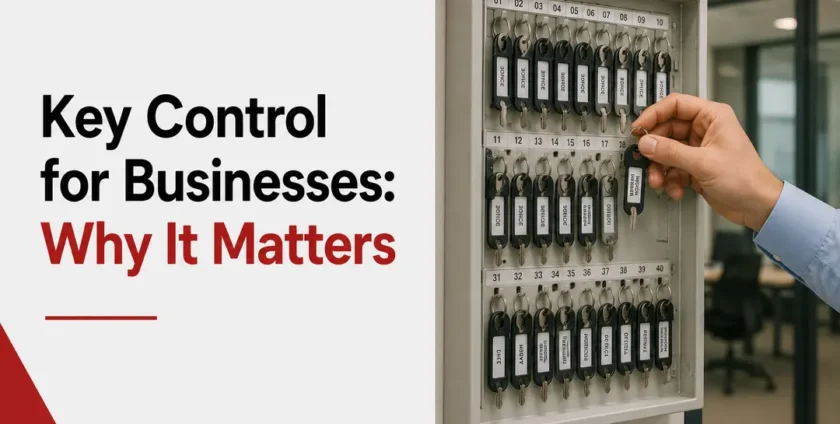
Keys are small, but they carry a lot of responsibility. A single business key may open the front door, office suite, storage room, warehouse, file room, cash area, or restricted space. If that key is lost, copied, stolen, or kept by someone who should no longer have access, the business may be exposed to unnecessary risk.
That is why key control matters.
Key control is the process of managing who has keys, what those keys open, whether copies can be made, and when locks should be rekeyed or upgraded. For businesses, good key control can help protect employees, customers, inventory, records, cash, equipment, and property.
Hughes Safe & Lock provides commercial locksmith services across South Louisiana, including Denham Springs, Baton Rouge, Covington, Mandeville, Madisonville, Slidell, New Orleans, and nearby communities.
Here is why key control matters and how businesses can improve it.
What Is Key Control?
Key control means knowing who has access to your business and making sure that access is properly managed.
A strong key control process answers questions like:
- Who has keys to the building?
- Which doors does each key open?
- Are former employees still holding keys?
- Can keys be copied without approval?
- Are spare keys stored securely?
- Are master keys limited to trusted people?
- Are locks rekeyed after key loss or employee turnover?
- Are restricted areas properly protected?
Without key control, a business may not know who can enter the property.
Why Key Control Is Important for Businesses
Every business needs to manage access. Even a small office or store may have several doors, keys, employees, vendors, contractors, and restricted areas.
Poor key control can lead to:
- Untracked access
- Lost keys
- Unauthorized key copies
- Former employees still having access
- Vendors or contractors keeping keys
- Too many people accessing restricted areas
- Security concerns after tenant or employee changes
- Confusion during emergencies
- Higher risk of theft or unauthorized entry
Good key control helps prevent these problems before they become serious.
1. Keys Can Be Copied
One of the biggest risks with standard keys is unauthorized duplication.
A key may be copied by an employee, contractor, tenant, cleaner, vendor, or anyone else who has temporary access. Even if there was no bad intention, extra copies can create long-term uncertainty.
Over time, a business may lose track of how many keys exist and who has them.
This is especially concerning for keys that open:
- Exterior doors
- Offices
- Storage rooms
- Inventory areas
- File rooms
- Cash rooms
- Warehouses
- Restricted spaces
If keys can be copied easily, the business has less control over access.
2. Former Employees May Still Have Access
Employee turnover is one of the most common reasons key control becomes a problem.
Even if an employee returns their key, copies may still exist. Knowing exactly how to protect your business after an employee leaves is vital to closing vulnerabilities before unauthorized access occurs.
This is especially important if the employee had access to:
- Main entrances
- Back doors
- Manager offices
- Inventory rooms
- Cash areas
- Records rooms
- Safe keys
- Master keys
- Restricted areas
After an employee leaves, business owners should not assume access is automatically secure.
3. Lost Keys Can Create Security Risks
A lost business key is not just inconvenient. It may create a real security concern.
The risk is higher if the key was lost with:
- An employee badge
- Business card
- Wallet
- Bag
- Vehicle
- Address information
- Company documents
- Access cards
- Other identifying items
If someone finds the key and knows what it opens, the business may be at risk.
In many cases, commercial rekeying can make the lost key stop working.
4. Stolen Keys Should Be Taken Seriously
A stolen key should be treated more urgently than a misplaced key.
If a key is stolen, there is a chance someone intentionally took access to the business. This may require immediate action, especially if the key opens exterior doors, restricted rooms, cash areas, or storage spaces.
Depending on the situation, a business may need:
- Emergency rekeying
- Lock replacement
- Master key system review
- Access control updates
- Safe code changes
- High-security lock upgrades
If business keys are stolen, call a commercial locksmith as soon as possible.
5. Too Many People May Have Access
As businesses grow, keys often get handed out quickly. Employees, managers, cleaning crews, vendors, contractors, maintenance workers, and temporary staff may all receive keys.
Over time, access can become too broad.
Too many people may have keys to:
- Main entrances
- Offices
- Storage rooms
- Supply closets
- File rooms
- Inventory areas
- Restricted rooms
- Back doors
- Shared spaces
Not everyone needs access to every area. A key control plan helps limit access based on role and responsibility.
6. Restricted Areas Need Stronger Control
Most businesses have areas that should not be open to everyone.
Restricted areas may include:
- Cash rooms
- Inventory rooms
- Medical storage areas
- File rooms
- HR offices
- Manager offices
- Server rooms
- Tool rooms
- Equipment storage
- Records rooms
- Safe rooms
If too many people can access these spaces, the business may be exposed to theft, privacy issues, or operational problems.
Key control helps ensure that only authorized people have access to sensitive areas.
7. Master Keys Must Be Carefully Managed
Master keys are convenient, but they also carry more risk.
A master key may open multiple doors across a business or property. If it is lost, stolen, copied, or given to the wrong person, many doors may be affected.
Businesses should limit master key access to trusted people only.
Master keys may be appropriate for:
- Business owners
- General managers
- Property managers
- Facility managers
- Authorized maintenance staff
- Security personnel
Not every supervisor or employee should have a master key. Planning a professional blueprint using our guide on why businesses should use master key systems helps operations stay streamlined while strictly controlling high-level access.
8. Poor Key Control Can Increase Rekeying Costs
When keys are not tracked, the business may need to rekey more locks than necessary after a problem.
For example, if a key is lost but no one knows which doors it opens, the business may have to rekey multiple doors to be safe.
A better key control system can help identify:
- Which key was lost
- Which doors it opens
- Who had access
- Whether rekeying is needed
- Whether only certain locks are affected
Good records can make security decisions easier and more targeted. It is helpful to determine when should a business rekey its locks so you can schedule preventative changes and control your security budget efficiently.
Signs Your Business Has a Key Control Problem
Your business may have a key control issue if:
- You do not know who has keys
- Former employees may still have keys
- Keys have been copied without approval
- Spare keys are not tracked
- Too many people have master keys
- Vendors or contractors have long-term access
- Keys are not recovered when employees leave
- You do not know which doors each key opens
- Employees carry too many keys
- Restricted areas are not properly controlled
- Lost keys are common
- You have not rekeyed after moving into a new space
If any of these apply, it may be time to review your locks and key system.
How to Improve Key Control
Improving key control does not always mean replacing every lock. In many cases, a business can start with practical steps.
Ways to improve key control include:
- Create a key log
- Track who receives each key
- Label keys carefully but securely
- Limit who can request copies
- Recover keys when employees leave
- Rekey after lost or stolen keys
- Limit master key access
- Use high-security locks where needed
- Use a master key system
- Consider access control for high-turnover areas
- Review access regularly
- Store spare keys securely
A commercial locksmith can help you decide which steps make sense for your business.
Create a Key Log
A key log is a simple but important tool for key control.
A key log should track:
- Key holder name
- Date key was issued
- Doors or areas the key opens
- Key number or identifier
- Date key was returned
- Whether the key was lost
- Whether the lock was rekeyed
- Who approved the key
This makes it easier to know who has access and what needs to happen when access changes.
Limit Who Can Receive Keys
Not every employee needs a key. Before issuing one, ask whether that person truly needs access.
Consider:
- What doors does the person need to open?
- Do they need after-hours access?
- Do they need access to restricted areas?
- Is temporary access enough?
- Could a manager provide access instead?
- Should access be removed later?
Keys should be issued intentionally, not casually.
Recover Keys During Employee Exit
When an employee leaves, key recovery should be part of the exit process.
Recover:
- Building keys
- Office keys
- Storage keys
- Desk keys
- File cabinet keys
- Vehicle keys
- Gate keys
- Safe keys
- Access cards
- Key fobs
- Master keys
After keys are returned, decide whether rekeying is still necessary. If copies may exist, rekeying may be the safer option.
Rekey Locks When Access Is Unclear
Rekeying is one of the most practical ways to restore key control.
Commercial rekeying may be needed when:
- An employee leaves
- A key is lost
- A key is stolen
- A tenant moves out
- A contractor had access
- You move into a new space
- Too many people have keys
- You are unsure who has access
Knowing the fundamental differences between high-security locks and standard locks helps business owners decide if they should simply adjust their existing pinning configurations or invest in advanced physical protection cylinders.
Use a Master Key System
A master key system can help businesses manage multiple doors with different access levels.
For example:
- Employees may access only their work areas
- Managers may access department areas
- Owners may access all approved areas
- Tenants may access only their suites
- Maintenance staff may access specific service areas
A master key system can reduce key clutter while keeping access organized.
However, it must be designed carefully. Too many master keys can weaken security.
Consider High-Security Locks
High-security locks can help improve key control by making unauthorized key duplication more difficult.
They may be useful for:
- Exterior doors
- Offices
- Cash rooms
- File rooms
- Inventory areas
- Medical offices
- Warehouses
- Multi-tenant properties
- Restricted business areas
Hughes Safe & Lock is a Medeco Security Center and can help businesses choose high-security lock options. If you are exploring broader operational upgrades, reviewing how to improve security for a small business provides an excellent strategic checklist for property defense.
Consider Access Control
Access control may be useful for businesses that need more flexible access management.
Instead of relying only on metal keys, access control can use:
- Key cards
- Fobs
- Keypads
- Codes
- Electronic credentials
- Keyless entry systems
Depending on the system, access can often be added, removed, or changed without rekeying locks every time an employee leaves.
Access control may be especially useful for:
- Employee turnover
- Multiple shifts
- Restricted areas
- Vendor access
- After-hours access
- Multiple doors
- Offices with sensitive records
- Businesses with many employees
Some businesses use both access control and traditional keys.
Secure Spare Keys
Spare keys should not be left in obvious or unsecured places.
Avoid storing spare keys:
- Under mats
- In unlocked drawers
- Behind counters
- In open desks
- In shared break rooms
- In vehicles
- With too many employees
- In unmarked containers without tracking
Spare keys should be stored securely and only accessible to authorized people.
Review Vendor and Contractor Access
Vendors, contractors, cleaners, and maintenance workers may need temporary access, but that access should be tracked.
Ask:
- Who received a key?
- What does the key open?
- Was the key returned?
- Could the key have been copied?
- Does the vendor still need access?
- Should the lock be rekeyed after the project ends?
- Would access control be better for temporary access?
Outside access should not be forgotten after the job is done.
Key Control for Multi-Tenant Buildings
Key control is especially important for multi-tenant properties, office suites, apartment buildings, and commercial rental spaces.
Property managers need to control access for:
- Tenants
- Maintenance staff
- Common areas
- Office suites
- Vacant units
- Storage rooms
- Utility rooms
- Vendor access
Rekeying between tenants, limiting master keys, and using a structured key system can help protect both the property owner and the occupants.
Key Control for Retail Stores
Retail businesses may need key control for:
- Main entrances
- Back doors
- Stockrooms
- Cash offices
- Display cases
- Manager offices
- Storage areas
- Safes
- Delivery areas
Because retail businesses often have employee turnover and vendor access, key tracking is important.
Key Control for Offices
Offices may need key control for:
- Office suites
- Private offices
- File rooms
- HR records
- IT rooms
- Conference rooms
- Storage closets
- Employee entrances
- Shared building access
A master key system or access control may help reduce confusion and improve security.
Key Control for Warehouses
Warehouses often have multiple access points, loading areas, inventory spaces, equipment rooms, and employee entrances.
Key control can help protect:
- Inventory
- Tools
- Vehicles
- Equipment
- Shipping areas
- Storage rooms
- Office areas
- Restricted zones
For warehouses, lost or untracked keys can create serious security concerns.
Common Key Control Mistakes
Avoid these common mistakes:
- Not tracking who has keys
- Giving keys to too many people
- Not rekeying after employee turnover
- Not rekeying after lost keys
- Allowing keys to be copied freely
- Giving out too many master keys
- Forgetting contractor or vendor access
- Leaving spare keys unsecured
- Not updating access after staff changes
- Using the same key for too many areas
- Not reviewing locks after moving into a new space
Key control is easier when it is managed consistently.
When to Call a Commercial Locksmith
Call a commercial locksmith if:
- You do not know who has the keys
- Keys have been lost or stolen
- An employee has left
- You moved into a new business space
- Former tenants may still have access
- You need a master key system
- You want high-security locks
- You need commercial rekeying
- You want access control
- Your keys are too easy to copy
- Your current key system is confusing
A locksmith can help you create a safer and more organized access system.
Call Hughes Safe & Lock for Business Key Control Support
If your business has too many keys, unclear access, lost keys, employee turnover, or restricted areas that need better protection, Hughes Safe & Lock can help.
We provide dedicated commercial locksmith services across South Louisiana. Our comprehensive commercial packages include commercial rekeying, lock replacement, master key systems, high-security locks, access control systems, keyless entry configurations, and safe servicing.
We serve Denham Springs, Baton Rouge, Covington, Mandeville, Madisonville, Slidell, New Orleans, and nearby communities.
For professional commercial locksmith service, call Hughes Safe & Lock at 225-664-2815 or 985-809-5625.
FAQs About Key Control for Businesses
What is key control for a business?
Key control is the process of managing who has keys, what those keys open, whether copies can be made, and when access should be changed or removed.
Why is key control important?
Key control helps businesses protect doors, employees, inventory, records, cash, equipment, and restricted areas by limiting unauthorized access.
Should a business rekey after an employee leaves?
Yes, especially if the employee had keys to exterior doors, restricted areas, offices, storage rooms, or sensitive business spaces.
How can a business prevent unauthorized key copies?
A business can use better key tracking, restricted key systems, high-security locks, and clear policies about who can request key copies.
Is a master key system good for key control?
Yes. A properly designed master key system can help organize access and reduce key clutter, but master keys should be limited to trusted people.
Can Hughes Safe & Lock help improve key control?
Yes. Hughes Safe & Lock provides commercial rekeying, master key systems, high-security locks, access control, and other commercial locksmith services across South Louisiana.
- By: andrew
- Category: Business Security
- 0 Comments
 Hughes Safe & Lock provides the finest quality work for residential and commercial clients.