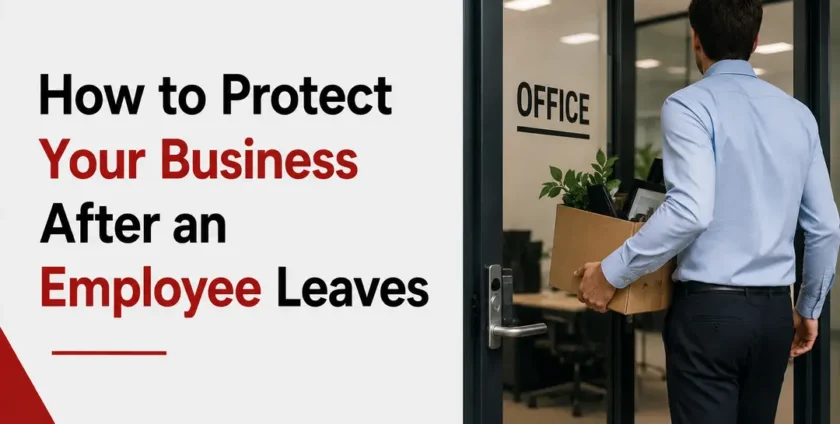
When an employee leaves your business, there is more to handle than payroll, paperwork, and staffing changes. You also need to think about physical access.
Did the employee have keys? Could copies have been made? Did they have access to offices, storage rooms, cash areas, safes, inventory, files, or restricted spaces? Did they use an access card, fob, keypad code, or master key?
Even when an employee leaves on good terms, it is smart to review your business security. Former employee access is one of the most common reasons businesses rekey locks, update access control, change codes, or review key systems.
Hughes Safe & Lock provides commercial locksmith services across South Louisiana, including Denham Springs, Baton Rouge, Covington, Mandeville, Madisonville, Slidell, New Orleans, and nearby areas.
Here is how to protect your business after an employee leaves.
Start With a Full Access Review
The first step is to understand what access the employee had.
Make a list of every area the employee could enter, including:
- Front entrance
- Back entrance
- Office suite
- Storage rooms
- Inventory areas
- Cash rooms
- File rooms
- Server rooms
- Employee entrances
- Warehouses
- Vehicles
- Safes
- Supply closets
- Restricted rooms
- Shared building areas
This helps you decide whether you need to recover keys, rekey locks, update access control, change keypad codes, or take additional security steps.
Recover All Business Keys
If the employee had physical keys, collect them as soon as possible.
This may include:
- Building keys
- Office keys
- Desk keys
- Cabinet keys
- Storage room keys
- Warehouse keys
- Vehicle keys
- Safe keys
- Master keys
- Gate keys
- Mailbox keys
- File cabinet keys
Recovering keys is important, but it does not always solve the full problem. A key may have been copied at some point, especially if it was not a restricted or high-security key.
That is why many businesses still choose to rekey after an employee leaves.
Do Not Assume Returned Keys Are Enough
Even if an employee returns every key you gave them, you may not know whether duplicate keys exist.
Keys may have been copied for convenience, shared with another employee, left in a vehicle, stored at home, or misplaced before being returned.
This does not always mean there was bad intent. But from a business security standpoint, uncertainty matters.
If the employee had access to important areas, rekeying may be a smart step.
Rekey Locks When Access Is Unclear
Commercial rekeying changes the internal parts of a lock so old keys no longer work. The existing lock hardware can often stay in place, but a new key is created for access.
Rekeying may be recommended if the employee had access to:
- Exterior doors
- Manager offices
- Inventory rooms
- File rooms
- Cash areas
- Storage spaces
- Restricted rooms
- Commercial suites
- Warehouses
- Business safes
- Master key systems
Rekeying can help restore control and reduce the risk of old keys being used later.
Learn more about when a business should rekey its locks.
Review Master Key Access
If the employee had a master key, the situation needs extra attention.
A master key may open multiple doors across the business. That means losing control of one master key can affect many areas.
If a former employee had master key access, consider:
- Which doors the master key opened
- Whether the key was returned
- Whether copies could exist
- Whether the master key system should be rekeyed
- Whether access levels should be redesigned
- Whether fewer people should have master keys going forward
A master key system should be convenient, but it should also be tightly controlled.
Update Access Control Immediately
If your business uses access control, remove the former employee’s credentials as soon as they leave.
This may include:
- Key cards
- Fobs
- PIN codes
- Keypad codes
- Electronic credentials
- Mobile access credentials
- Door access permissions
- After-hours access
- Restricted-area permissions
Access control is useful because employee access can often be removed without changing every lock. However, it only works well if credentials are updated promptly.
If several employees share the same keypad code, consider changing the code when someone leaves.
Change Shared Codes
Shared codes can create problems after an employee leaves.
If multiple employees use the same keypad code, door code, alarm code, gate code, or safe code, you may not be able to remove one person’s access without changing the code for everyone.
After an employee leaves, review shared codes for:
- Keypads
- Employee entrances
- Back doors
- Gates
- Alarm systems
- Safes
- Lockboxes
- Storage rooms
If the former employee knew the code, changing it may be necessary.
Check Safe Access
If the employee had access to a safe, review the safe security immediately.
This may include:
- Safe keys
- Safe combinations
- Digital safe codes
- Deposit safe access
- Cash safe access
- Business document safe access
- Gun safe access
- Jewelry or valuables safe access
If the safe contains cash, checks, documents, keys, access cards, inventory, or sensitive materials, you should confirm that only authorized people still have access.
Depending on the safe and lock type, you may need to change the combination, update the code, recover keys, or speak with a safe professional.
Review Business Vehicle Keys
If the employee used company vehicles, review vehicle access too.
This may include:
- Car keys
- Truck keys
- Van keys
- Fleet keys
- Trailer keys
- Equipment keys
- Fuel keys
- Gate remotes
- Key fobs
- Transponder keys
If vehicle keys are missing or unaccounted for, an automotive locksmith may be able to help with replacement keys, rekeying options, or key fob support, depending on the vehicle.
Secure File Cabinets and Storage Areas
Many businesses focus on exterior doors but forget about interior locks.
After an employee leaves, check access to:
- File cabinets
- Desk drawers
- Storage closets
- Supply rooms
- HR files
- Financial records
- Customer information
- Inventory cages
- Medication storage
- Equipment rooms
If the employee had keys to interior storage, you may need to rekey or replace those locks too.
Review Restricted Areas
Not every employee needs access to every part of the business. When someone leaves, it is a good time to review whether your current access structure still makes sense.
Restricted areas may include:
- Cash rooms
- Inventory rooms
- Server rooms
- Owner offices
- Manager offices
- File rooms
- Medication storage
- Tool rooms
- Equipment rooms
- Records storage
If too many employees have access to restricted areas, consider rekeying, using a master key system, or adding access control.
Consider the Nature of the Departure
The level of urgency may depend on how the employee left.
A routine resignation may require a standard access review. A termination, conflict, theft concern, missing keys, or security incident may require faster action.
Rekeying or access updates may be especially important if:
- The employee was terminated
- The employee left unexpectedly
- Keys were not returned
- There was a workplace dispute
- There was a theft concern
- The employee had access to cash or records
- The employee had a master key
- The employee knew safe codes or door codes
- You are unsure whether keys were copied
When in doubt, it is better to review access sooner rather than later.
Do You Need to Rekey Every Lock?
Not always.
The right approach depends on what the employee could access.
You may only need to rekey certain doors if the employee had limited access. But if the employee had a master key, exterior key, or broad building access, more locks may need to be rekeyed.
A commercial locksmith can help you determine:
- Which locks need rekeying
- Which keys should be replaced
- Whether the master key system is affected
- Whether any locks should be upgraded
- Whether access control would be more practical
- Whether high-security locks make sense
The goal is to restore control without doing unnecessary work.
When Lock Replacement May Be Better Than Rekeying
Rekeying is useful when the lock hardware is still in good condition. But sometimes replacing locks is the better choice.
Lock replacement may make sense if:
- The locks are old
- The locks are damaged
- Keys are difficult to turn
- Hardware is loose
- The door does not lock properly
- The locks are low quality
- You want stronger security
- You want high-security locks
- You want to upgrade commercial hardware
Reviewing your lock placement is an excellent component of learning how to improve security for a small business without exceeding your operational budget.
Consider High-Security Locks
High-security locks may help businesses reduce unauthorized key duplication and improve protection for important doors. Evaluating the hardware differences between high-security locks and standard locks will clarify how restricted keyways stop former staff members from printing copies at standard hardware kiosks.
They may be useful for:
- Exterior doors
- Cash rooms
- File rooms
- Inventory areas
- Medical offices
- Manager offices
- Restricted rooms
- Warehouses
- Multi-tenant properties
- Offices with sensitive records
Hughes Safe & Lock is a Medeco Security Center and can help commercial clients choose high-security lock options.
Consider Access Control for Employee Turnover
If your business has regular employee turnover, access control may be worth considering.
Access control systems can be used:
- Key cards
- Fobs
- Keypads
- PIN codes
- Electronic credentials
- Keyless entry systems
Depending on the system, access can often be added or removed without rekeying locks every time someone leaves.
Access control may be useful for businesses with:
- Multiple employees
- Multiple shifts
- Restricted rooms
- After-hours access
- Frequent turnover
- Vendor access
- Sensitive records
- Inventory storage
Many businesses use access control along with traditional locks, master key systems, and high-security hardware.
Create an Employee Exit Security Checklist
A checklist can help your business stay consistent every time an employee leaves.
Your checklist may include:
- Recover all keys
- Recover access cards and fobs
- Remove electronic access
- Change shared keypad codes
- Change safe codes if needed
- Review master key access
- Check company vehicle keys
- Recover gate remotes
- Recover lockbox keys
- Review storage room access
- Rekey affected locks
- Update key records
- Remove alarm or building access
- Review restricted areas
- Notify managers of access changes
A clear process reduces mistakes during busy transitions.
Improve Key Tracking Going Forward
After handling the immediate issue, improve how keys are tracked in the future.
Good key control practices include:
- Keep a written key log
- Record who receives each key
- Limit who can request keys
- Avoid unnecessary duplicate keys
- Recover keys during employee exits
- Rekey after lost or stolen keys
- Use restricted keys for sensitive areas
- Review access regularly
- Limit master key access
- Store spare keys securely
Key control is easier when it is managed before a problem happens.
Do Not Forget Vendors and Contractors
Employees are not the only people who may have access to your business.
Vendors, cleaners, contractors, delivery teams, maintenance workers, IT providers, and property managers may also have keys or codes.
When an employee leaves, especially a manager or operations person, review whether outside access was shared with anyone else.
Ask:
- Did the employee give keys to a vendor?
- Did they share keypad codes?
- Did they manage contractor access?
- Did they keep spare keys?
- Were keys stored in a place others could access?
This can help identify hidden access risks.
When to Call a Commercial Locksmith
You should call a commercial locksmith after an employee leaves if:
- Keys were not returned
- Keys may have been copied
- The employee had exterior door access
- The employee had a master key
- The employee knew safe or keypad codes
- The employee had access to restricted areas
- You are unsure who has keys
- You want to rekey business locks
- You want to upgrade locks
- You need a master key system
- You want access control
- You need high-security locks
Learning how to choose a licensed locksmith in Louisiana will ensure you select a fully vetted, local team capable of managing sensitive business security assets.
Call Hughes Safe & Lock for Commercial Rekeying and Access Control
If an employee has left your organization and you need to secure your premises, Hughes Safe & Lock is ready to assist.
We provide comprehensive commercial locksmith services across South Louisiana, including Denham Springs, Baton Rouge, Covington, Mandeville, Madisonville, Slidell, and New Orleans.
Our commercial solutions include business rekeying, lock replacement, master key systems, high-security hardware deployment, digital keyless entry installation, and safe management.
Please feel free to contact us directly or call Hughes Safe & Lock at 225-664-2815 or 985-809-5625 to speak with a commercial technician today.
FAQs About Protecting a Business After an Employee Leaves
Should I rekey my business after an employee leaves?
You should consider rekeying if the employee had keys to exterior doors, restricted rooms, offices, storage areas, cash areas, or sensitive business spaces.
Is getting the key back enough?
Not always. Even if a key is returned, copies may exist. Rekeying helps make old keys stop working.
What if the employee had a master key?
If a former employee had a master key, you should review the full master key system because that key may open multiple doors.
Should I change keypad codes after an employee leaves?
Yes, especially if the employee knew shared door codes, safe codes, gate codes, or access codes.
Can access control help with employee turnover?
Yes. Access control can make it easier to remove or change employee access without relying only on physical keys.
Can Hughes Safe & Lock help after an employee leaves?
Yes. Hughes Safe & Lock provides commercial rekeying, lock replacement, master key systems, access control, high-security locks, and safe services across South Louisiana.
- By: andrew
- Category: Business Security
- 0 Comments
 Hughes Safe & Lock provides the finest quality work for residential and commercial clients.