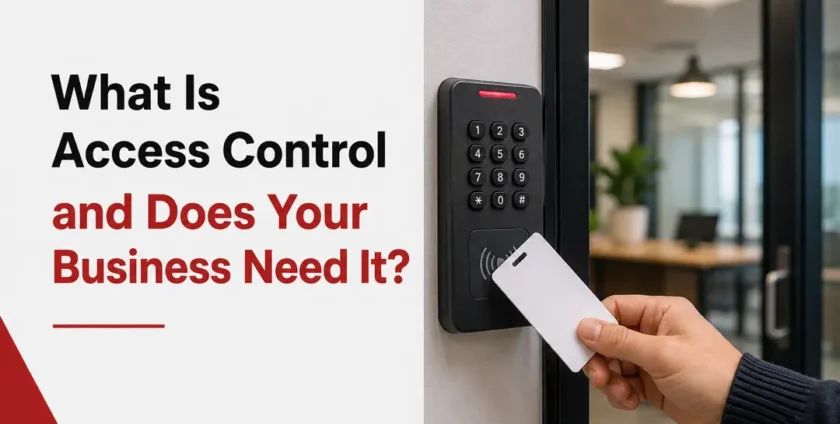
Every business needs to control who can enter the building, which areas employees can access, and how secure doors are managed throughout the day. Traditional locks and keys can work for many businesses, but as a company grows, key control can become harder to manage.
Keys can be lost, copied, shared, or kept by former employees. Managers may not always know who has access to which doors. If a key is missing, the business may need to rekey locks to restore security.
Access control gives businesses another way to manage entry. Instead of relying only on physical keys, access control systems use cards, keypads, fobs, electronic credentials, or other keyless entry methods to control access to doors and secure areas.
Hughes Safe & Lock provides commercial locksmith services across South Louisiana, including Denham Springs, Baton Rouge, Covington, Mandeville, Madisonville, Slidell, New Orleans, and nearby communities. Here is what business owners should know about access control and whether it may be right for their property.
What Is Access Control?
Access control is a security system that manages who can enter a building, room, office, or restricted area.
Instead of giving everyone a traditional metal key, a business can use electronic access methods such as:
- Key cards
- Key fobs
- PIN codes
- Keypads
- Electronic locks
- Keyless entry systems
- Controlled door access
- User-based credentials
The goal is to give the right people access to the right areas while limiting access for everyone else.
Access control can be used for exterior doors, employee entrances, private offices, storage rooms, server rooms, supply closets, medical areas, cash rooms, warehouses, and other restricted spaces.
How Access Control Works
Access control systems work by checking a person’s credentials before unlocking a door.
A basic process may look like this:
- An employee presents a card, fob, code, or credential.
- The system checks whether that credential is authorized.
- If access is approved, the door unlocks.
- If access is not approved, the door stays locked.
- Access may be limited by door, user, schedule, or permission level.
Depending on the system, access can be managed by user, employee role, time of day, building area, or security need.
This makes access control more flexible than traditional keys in many commercial settings.
Access Control vs Traditional Keys
Traditional keys are simple and familiar. They can work well for small businesses with only a few doors and a small team.
However, traditional keys have limitations.
With regular keys:
- Keys can be copied
- Keys can be lost
- Former employees may still have access
- It can be hard to track who has which key
- Businesses may need to rekey locks after key loss or employee turnover
- Managers may carry too many keys
- Access cannot easily be changed without changing the lock
Access control gives businesses more control over who can enter and when.
With access control:
- Credentials can often be added or removed
- Access can be limited by person or area
- Lost cards or fobs may be easier to deactivate
- Employees do not need as many physical keys
- Restricted areas can be better controlled
- Entry can be more convenient for authorized users
For many businesses, access control is not about replacing every lock. It is about improving control where it matters most.
Signs Your Business May Need Access Control
Access control may be worth considering if your business is growing, has multiple employees, or needs better control over secure areas.
Your business may need access control if:
- Too many people have keys
- Former employees may still have keys
- Keys have been lost or copied
- You have restricted areas
- You want to control employee access by role
- You need to limit after-hours access
- You manage multiple doors
- You have tenant or vendor access concerns
- You want keyless entry for convenience
- You need better security for offices, records, or inventory
- You want to reduce the need for frequent rekeying
If you are not sure who has access to your building, learning the baseline mechanics of key control for businesses is an excellent first step for an audit.
Benefits of Access Control for Businesses
Access control can help businesses improve security, convenience, and access management.
Common benefits include:
- Better control over who enters the building
- Easier employee access management
- Reduced reliance on physical keys
- Stronger protection for restricted areas
- Convenient access for authorized users
- Easier response when employees leave
- Improved control over vendors, tenants, or contractors
- More flexible access than traditional locks
- Better security planning for growing businesses
For business owners and managers, access control can make security easier to manage day to day.
Better Employee Access Management
Not every employee needs access to every area of your business.
For example:
- Front desk staff may need access to the main office.
- Managers may need access to private offices.
- Warehouse employees may need access to storage areas.
- Maintenance staff may need access to utility areas.
- Owners may need access to all doors.
- Vendors may only need limited access during certain times.
Access control allows businesses to create access levels based on role and need.
This can help reduce unnecessary access and protect sensitive spaces.
Reducing the Risk of Lost Keys
Lost keys can create serious problems for a business. If a key opens exterior doors or restricted areas, the business may need to rekey locks to restore security.
With access control, a lost card, fob, or credential may be easier to remove from the system, depending on the setup. This can reduce the disruption caused by missing keys.
This is especially useful for businesses with frequent employee changes, multiple shifts, or many people needing access.
Better Security for Restricted Areas
Most businesses have areas that should not be open to everyone.
Restricted areas may include:
- Manager offices
- HR file rooms
- Cash rooms
- Server rooms
- Medical storage areas
- Inventory rooms
- Equipment rooms
- Records rooms
- Supply closets
- Back offices
- Warehouses
Access control can help ensure only authorized people enter those spaces. This is especially important for businesses that handle sensitive records, valuable inventory, customer information, medication, cash, or specialized equipment.
If you want to keep mechanical deadbolts alongside electronic locks, you should explore upgrading these targeted rooms by checking out high-security locks vs standard locks to ensure they resist physical picking or drilling.
Access Control for Offices
Office buildings often need different levels of access for employees, managers, tenants, visitors, and vendors.
Access control can be useful for:
- Main entry doors
- Individual office suites
- Conference rooms
- File rooms
- IT rooms
- Employee entrances
- Storage areas
- Shared tenant areas
For office environments, access control can help reduce key clutter and make daily entry more convenient. However, electronic glitches or forgotten codes can still happen. Knowing what an office lockout means and what business owners should do first can save you hours of downtime if your entry system malfunctions.
Access Control for Retail Stores
Retail businesses often need secure access for staff, managers, delivery personnel, and vendors.
Access control can help protect:
- Stockrooms
- Cash offices
- Employee entrances
- Back doors
- Manager offices
- Storage areas
- Receiving areas
Retail businesses may also benefit from limiting access to certain areas after hours or during specific shifts. If you are exploring broader operational upgrades, studying how to improve security for a small business provides a useful strategic baseline.
Access Control for Warehouses and Industrial Spaces
Warehouses and industrial buildings often have multiple entry points, loading areas, offices, storage zones, and restricted workspaces.
Access control can help manage access to:
- Main entrances
- Loading docks
- Inventory storage
- Equipment rooms
- Office areas
- Employee entrances
- Restricted zones
- Tool rooms
For businesses with valuable equipment or inventory, controlling access can be an important part of security planning.
Access Control for Medical and Professional Offices
Medical, dental, legal, financial, and professional offices may need extra control over sensitive areas.
Access control can help limit entry to:
- Patient records
- Client files
- Medication storage
- Private offices
- Staff-only areas
- IT systems
- Financial documents
- Supply rooms
For professional offices, access control can support privacy, organization, and better access management.
Access Control vs Master Key Systems
Access control and master key systems both help businesses manage access, but they work in different ways.
A master key system uses physical keys. Different keys open different doors, while a master key can open multiple approved doors.
Access control uses electronic credentials, such as cards, fobs, codes, or keyless entry systems.
A master key system may be a good choice if:
- You want a structured key system
- You prefer traditional locks
- You need different access levels
- You want managers to carry fewer keys
- You have multiple doors but simple access needs
You can read our detailed guide on why businesses should use master key systems to evaluate how these mechanical tiers operate.
Access control may be a good choice if:
- You want keyless entry
- You want to add or remove access more easily
- You have employee turnover
- You want to control access by schedule or area
- You need stronger control over restricted spaces
- You want to reduce reliance on physical keys
Some businesses use both systems together.
Does Every Business Need Access Control?
Not every business needs electronic access control. A small office with one or two trusted employees may be fine with traditional locks and keys.
However, access control becomes more useful when a business has:
- Multiple employees
- Multiple doors
- Different access levels
- Employee turnover
- Restricted areas
- Valuable inventory
- Sensitive records
- After-hours access needs
- Multiple shifts
- Vendors or contractors
- Security concerns
If your current key system is hard to manage, access control may be worth considering.
What Doors Should Have Access Control?
You do not always need access control on every door. Many businesses start with the most important doors first.
Common access control locations include:
- Main entrance
- Employee entrance
- Back door
- Office suite entrance
- Storage room
- Cash room
- Server room
- Records room
- Warehouse entry
- Manager office
- Restricted area
A commercial locksmith can help you decide which doors should be controlled and which can remain on traditional locks.
What Happens When an Employee Leaves?
Employee turnover is one of the biggest reasons businesses consider access control.
With traditional keys, a former employee may still have a copy. Even if the key is returned, the business may not know whether duplicates were made. With access control, the business may be able to immediately remove or change that employee’s access digitally.
Whether you handle this through software adjustments or physical hardware, establishing a clear process to protect your business after an employee leaves is essential for long-term protection.
Can Access Control Help Reduce Rekeying?
Access control may reduce the need for frequent rekeying in some situations, especially when access is managed electronically.
If an employee loses a key card or fob, it may be possible to deactivate that credential instead of rekeying the lock.
However, traditional locks may still need rekeying if physical keys are also in use or if a security concern involves mechanical locks. Knowing exactly when a business should rekey its locks helps ensure your mechanical baselines remain secure alongside electronic options.
Many businesses use a combination of access control, rekeying, and master key systems for complete access management.
Common Access Control Mistakes Businesses Make
Access control is helpful, but it should be planned carefully.
Common mistakes include:
- Adding access control without reviewing current locks
- Giving too many people too much access
- Forgetting to remove former employees
- Not planning for after-hours access
- Ignoring emergency access needs
- Choosing the wrong doors first
- Not training staff on the system
- Using shared codes too widely
- Failing to review access regularly
- Not combining access control with good physical hardware
A good access control plan should match how the business actually operates.
Questions to Ask Before Installing Access Control
Before choosing access control, ask:
- Which doors need controlled access?
- Who needs access to each area?
- Are there restricted rooms?
- Do employees need access after hours?
- How often do employees come and go?
- Are keys frequently lost or copied?
- Do vendors or contractors need temporary access?
- Should access be controlled by role or schedule?
- Do we need access control, master keying, or both?
- Is the existing door hardware in good condition?
These questions help determine the right solution.
Why Work With a Commercial Locksmith?
Access control should be connected to the physical security of your doors, locks, and hardware.
A commercial locksmith can help review:
- Door condition
- Lock hardware
- Existing key systems
- Restricted areas
- Employee access needs
- Rekeying needs
- Master key options
- High-security lock options
- Keyless entry options
- Safe and security concerns
Before booking, you can check our market cost breakdown on how much a locksmith costs in Louisiana to establish a baseline budget for professional commercial technicians.
Hughes Safe & Lock can help businesses choose access control and keyless entry solutions that fit their building and security needs.
Call Hughes Safe & Lock for Commercial Access Control
If your business needs better control over who enters your building or restricted areas, Hughes Safe & Lock is ready to assist.
We provide comprehensive commercial locksmith solutions across South Louisiana. Our expert services include access control systems, keyless entry configurations, master key structures, high-security lock upgrades, corporate rekeying, lock replacement, and safes.
We proudly serve Denham Springs, Baton Rouge, Covington, Mandeville, Madisonville, Slidell, New Orleans, and nearby communities.
For professional assistance or a system estimate, please call Hughes Safe & Lock at 225-664-2815 or 985-809-5625, or submit a dynamic service inquiry through our page to contact us directly today.
FAQs About Access Control for Businesses
What is access control?
Access control is a security system that manages who can enter a building, room, or restricted area. It may use key cards, fobs, keypads, codes, or other electronic credentials.
Is access control better than traditional keys?
Access control can offer more flexibility than traditional keys, especially for businesses with multiple employees, restricted areas, or employee turnover. However, some businesses may still use both access control and traditional locks.
Does my small business need access control?
A small business may need access control if it has multiple employees, valuable inventory, sensitive records, after-hours access needs, or concerns about lost keys.
Can access control help when employees leave?
Yes. Depending on the system, employee credentials can often be removed or changed, reducing the risk of former employees keeping access.
What doors should have access control?
Common doors include main entrances, employee entrances, back doors, storage rooms, cash rooms, server rooms, records rooms, and restricted areas.
Can Hughes Safe & Lock help with access control?
Yes. Hughes Safe & Lock provides access control, keyless entry, and commercial locksmith services for businesses across South Louisiana.
- By: andrew
- Category: Commercial Locksmith
- 0 Comments
 Hughes Safe & Lock provides the finest quality work for residential and commercial clients.