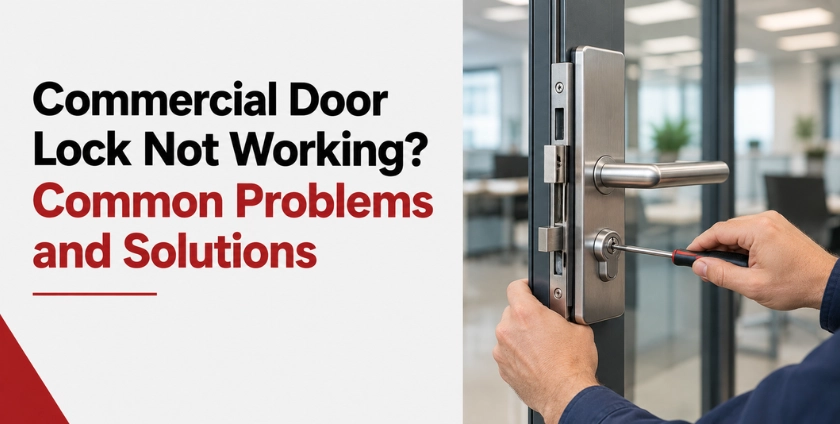
A commercial door lock that sticks, jams, or refuses to latch can quickly become a problem for your business. Employees may struggle to enter, customers may find the entrance difficult to use, or you may be unable to secure the property after closing.
The problem isn’t always the lock itself. A commercial door that won’t lock may have a worn cylinder, a damaged latch, a misaligned strike plate, a failing door closer, or an issue with its electronic access system.
The first step is to determine whether the problem involves the key, the locking mechanism, or how the door closes. Replacing a lock won’t necessarily fix a door that has shifted out of alignment.
Below, we’ll explain common commercial door lock problems, what you can safely check, and when to contact a professional locksmith.
Why Is My Commercial Door Lock Not Working?
Commercial doors see heavy use, especially in retail stores, offices, restaurants, warehouses and multi-tenant buildings.
Over time, repeated opening and closing can affect the door’s alignment, hardware, and locking mechanism.
Here’s a quick guide to common symptoms.
| Problem | Possible cause | Recommended next step |
| Key won’t turn | Worn key, damaged cylinder, or internal obstruction | Try a properly authorized spare key and contact a locksmith |
| Door closes but won’t lock | Misaligned strike plate or damaged latch | Have the latch and alignment inspected |
| Lock is difficult to turn | Worn mechanism or pressure against the latch | Avoid forcing the key |
| Door must be lifted to lock | Sagging hinges or door misalignment | Request a door hardware assessment |
| Electronic lock won’t respond | Power, credential, reader, or hardware issue | Check authorized system notifications and request service |
| Door lock feels loose | Loose or worn hardware | Arrange inspection before the problem worsens |
| Key turns but door remains locked | Internal lock or latch mechanism failure | Contact a commercial locksmith |
Different problems require different repairs. A professional assessment can help determine whether the existing hardware needs adjustment, repair, or replacement.
1. Commercial Door Lock Is Sticking or Difficult to Turn
One of the most common complaints is a key that becomes increasingly difficult to turn.
You may notice the lock works fine in the morning but becomes harder to operate later, or that employees have to move the handle while turning the key.
What causes a sticking commercial lock?
Several issues may be responsible:
- Worn keys: A heavily used key may no longer engage the cylinder correctly.
- Internal wear: Pins, springs, and other lock components can deteriorate with repeated use.
- Door misalignment: Pressure on the locking mechanism can make the key hard to turn.
- Contamination: Dirt, debris, or inappropriate lubricants can interfere with internal components.
What should you do?
First, determine whether the door closes normally and whether the problem occurs with more than one authorized key.
If one key works and another does not, the issue may involve the key itself.
If several keys are difficult to turn, the lock or door alignment may need professional attention. Upgrading from standard locks to durable high-security locks can often reduce ongoing cylinder wear while improving protection against key duplication.
Avoid using excessive force. A broken key inside the cylinder can create an additional access problem.
A commercial locksmith can assess the cylinder and determine whether the existing lock can be serviced or requires replacement.
2. Commercial Door Closes but Won’t Lock
A door may appear to close completely without the latch engaging properly.
This is particularly concerning for exterior storefront doors, employee entrances, and warehouse access doors.
Why does this happen?
For the door to secure properly, the latch must align with the opening in the strike plate.
If the door shifts due to hinge wear, building movement, or repeated use, the latch may no longer align.
The problem may also involve a damaged latch or a door closer that isn’t operating properly.
Signs of a door alignment problem
- You must push or pull the door firmly before it locks.
- The latch hits the door frame instead of entering the strike plate.
- Visible scrape marks appear around the latch or strike.
- The gap between the door and frame appears uneven.
- The door operates differently depending on how firmly you close it.
What’s the solution?
The right repair depends on whether the problem is door alignment, the latch, the hinges or the closer.
Replacing the lock cylinder alone may not resolve the issue.
If your commercial door won’t latch consistently, have a professional inspect it instead of repeatedly forcing it closed.
3. Key Turns, but Commercial Door Won’t Unlock
Sometimes the key turns normally, but the door remains locked.
This can indicate that the cylinder is operating while another component inside the lock is failing to release the latch or bolt.
Possible causes include:
- Worn internal lock components
- A damaged cam or connecting mechanism
- A malfunctioning latch assembly
- Loose or disconnected hardware
- Mechanical pressure caused by door alignment
This problem can occur with different commercial lock types, including mortise locks and cylindrical locksets.
Should you keep turning the key?
No. Repeatedly forcing the mechanism may worsen the damage.
If the key operates but the door remains locked, a commercial locksmith can assess the hardware and determine the appropriate repair.
If the problem has already prevented access to your business, see our guide on office lockout: what to do.
4. Commercial Door Lock Is Loose or Wobbly
A loose lock or door handle may seem like a minor inconvenience, but it can signal early hardware wear.
Commercial doors often experience more frequent use than residential entrances, particularly at restaurants, shops, offices and public-facing facilities.
Common warning signs
- The handle moves excessively.
- The lock cylinder feels loose.
- The lever doesn’t return to its normal position.
- Hardware shifts when someone operates the door.
- Screws or mounting components appear damaged.
Loose hardware can affect latch operation and may eventually prevent the door from locking properly.
Can it be repaired?
Some problems can be resolved by correcting loose mounting hardware or replacing individual components.
However, damaged internal parts or unsuitable hardware may require replacing the entire lock.
If a commercial entrance is used frequently, addressing the problem early is essential to improving security for small business properties before unexpected failures occur.
5. Storefront Door Lock Not Working
Storefront entrances often use locking hardware that differs from ordinary residential doors.
For example, glass-and-aluminum storefront doors may use narrow-stile mortise locks, hook bolts, deadlatches or other specialized hardware.
These components must work correctly with the door frame and strike.
Common storefront door lock problems
- The key turns, but the bolt doesn’t move: Internal components may be worn or damaged.
- The door locks only when pulled tightly: The door or strike may be misaligned.
- The lock becomes difficult to operate after closing: Pressure against the bolt or latch may be affecting the mechanism.
- The door handle is loose: The operating hardware may require inspection or replacement.
- The door doesn’t remain securely closed: The issue could involve the latch, closer, strike or frame.
Storefront doors may also have specific accessibility, emergency exit, and building-code requirements.
Avoid modifying exit hardware or disabling locking components as a temporary fix.
A professional should identify the installed hardware and assess the full door assembly before recommending repairs.
6. Electronic Commercial Door Lock Not Working
Not every commercial locking problem involves a traditional key.
Businesses using keyless entry or electronic access control may experience problems with card readers, PIN codes, electronic locks, or access permissions.
Why might an electronic lock stop working?
- Power interruption: Some devices require an external power supply or have batteries that need replacement.
- Credential problems: An employee’s card, fob, or access code may be inactive or incorrectly assigned.
- Reader malfunction: The reader may fail to recognize an otherwise valid credential.
- Wiring or hardware issues: Damaged wiring or malfunctioning electronic components can interfere with operation.
- Mechanical door problems: Even when the electronic system accepts a credential, the door may still be difficult to open if the latch or strike is under pressure.
What can you check?
If you’re an authorized system administrator, check whether the problem affects one user or everyone.
Review any available system notifications and determine whether the issue occurs at one entrance or multiple doors.
Do not bypass safety equipment, disconnect locking hardware, or attempt unauthorized electrical changes.
An access control technician or qualified locksmith can determine whether the issue is mechanical, electronic, or related to system configuration.
7. Commercial Door Won’t Close or Latch Automatically
A commercial door may have a properly functioning lock but still fail to secure because it doesn’t close correctly.
Many business entrances use door closers to control door movement and help it return to the closed position.
When a closer fails, or the door becomes misaligned, the latch may not engage.
Possible causes
- Worn or loose hinges
- Improperly operating door closers
- Damaged or displaced strike plates
- Door frame misalignment
- Weatherstripping interference
- Pressure differences around the doorway
- Worn latch hardware
Why is this important?
A door that doesn’t latch may leave a business entrance unsecured, even when employees believe they’ve locked it.
In addition, fire-rated doors and designated exit doors may have specific closing, latching, and emergency egress requirements.
These problems should be evaluated promptly.
Not every door-closing issue is a locksmith-only repair. Depending on the cause, a qualified commercial door hardware specialist may be needed.
Should You Repair, Rekey, or Replace a Commercial Door Lock?
These services solve different problems, and choosing the wrong one may leave the original issue unresolved.
| Service | When it may be appropriate |
| Lock repair | The hardware has a repairable mechanical problem |
| Lock rekeying | The lock operates correctly, but you need to change which keys work |
| Lock replacement | Hardware is damaged, worn out, incompatible, or no longer meets security requirements |
| Door alignment or hardware service | The door, latch, hinges, or strike do not align properly |
| Access control service | Electronic credentials, readers, wiring, or control equipment are malfunctioning |
When is rekeying not enough?
Rekeying changes the key combination inside a compatible lock cylinder. It does not automatically repair a damaged latch, worn handle, misaligned door or malfunctioning electronic system.
If your locks work fine mechanically but you have security concerns after turnover, check when to rekey locks and how to protect your business after an employee leaves.
If your commercial lock isn’t working mechanically, you must address the underlying hardware. For a full comparison, read rekeying vs. replacing locks.
What Should You Do if Your Business Door Won’t Lock?
If you discover the problem during business hours or while closing for the day, your priority should be people’s safety and the property’s security.
Step 1: Identify the Problem
Determine whether the key, handle, latch, door alignment, or electronic access system appears to be failing. Avoid dismantling the hardware if you aren’t qualified to service it.
Step 2: Avoid Forcing the Lock
Repeatedly forcing a stuck key, handle, or door can damage components and complicate repairs.
Step 3: Check Whether the Door Is Actually Secure
A door can appear closed while the latch has not engaged. If you’re responsible for the property, visually check the condition without forcing or modifying the hardware.
Step 4: Maintain Safe Access
If an entrance is unreliable, follow your property’s security procedures and arrange appropriate supervision or alternative access where permitted. Never block a required emergency exit or compromise building safety to secure the door.
Step 5: Contact a Commercial Locksmith
Explain the symptoms, type of entrance, and whether the door is currently stuck open, locked shut, or unable to secure the property. When booking assistance, consult how to choose a licensed locksmith in Louisiana.
For urgent lock or security problems, contact Hughes Safe & Lock’s emergency locksmith team.
How Much Does Commercial Door Lock Repair Cost?
The cost depends on which component has failed and what work is required.
A straightforward lock adjustment may cost less than replacing specialized commercial hardware, correcting a door alignment problem, or servicing an electronic access system.
Factors affecting the estimate include:
- Type and brand of commercial lock
- Extent of mechanical damage
- Need for replacement parts
- Door construction and alignment
- Number of affected entrances
- Emergency or after-hours service
- Property location
Before approving work, ask whether the quote covers diagnostic labor, replacement hardware, installation, and any additional service charges.
For a more detailed breakdown, see how much a commercial locksmith costs. For broader regional rates, review how much a locksmith costs in Louisiana.
How to Prevent Commercial Door Lock Problems
Not every lock failure is preventable, but routine inspections and sensible maintenance can help you spot problems before they interrupt business operations.
Pay Attention to Early Warning Signs
Don’t ignore a key that repeatedly sticks, a handle that feels loose, or a door that needs extra force to latch.
Keep Track of Problem Doors
If employees report the same issue repeatedly, document the symptoms and request an assessment instead of relying on repeated temporary fixes.
Avoid Improper Lubricants
Different locking mechanisms have different maintenance requirements. Use only products and procedures recommended for the specific hardware.
Maintain Key Control
Damaged, worn, or unauthorized duplicate keys can create access and security issues.
A documented key-control process helps businesses manage who has keys and when replacement or rekeying may be required. Learn more in our guide to key control for businesses, or consider organizing physical building keys by exploring why businesses should use master key systems.
Schedule Service When Problems Develop
Addressing sticking locks, damaged handles and doors that fail to latch promptly can reduce the risk of unexpected lockouts or unsecured entrances.
Commercial Door Lock Services in Southern Louisiana
A commercial door that doesn’t lock properly can interrupt business operations and expose your property to avoidable security risks.
Hughes Safe & Lock offers commercial locksmith services including lock replacement, rekeying, key replacement, high-security locks, master key systems and access control.
Our team serves businesses across Southern Louisiana through our dedicated locations, including specialized commercial technicians in Denham Springs and Covington, as well as Baton Rouge, Mandeville, Madisonville, Slidell, and New Orleans.
Whether you manage an office, retail store, commercial property, or warehouse, contact Hughes Safe & Lock to discuss your lock problem and available service options.
- Denham Springs: (225) 664-2815
- Covington: (985) 809-5625
Frequently Asked Questions
Why is my commercial door lock suddenly not working?
Possible causes include internal lock damage, a worn key, misaligned door hardware, a faulty latch, or an electronic access problem. The specific cause depends on the lock type and symptoms.
Why does my business door lock only when I lift the handle?
This may indicate door or latch misalignment, worn hinges, or a problem with the locking mechanism. A locksmith or qualified door hardware specialist can identify the cause.
Can a commercial door lock be repaired instead of replaced?
Sometimes. Repair may be possible when the underlying hardware is serviceable. Replacement may be more appropriate when components are badly worn, damaged, or unsuitable for the property.
Why does my storefront door close but not latch?
The latch may not align with the strike plate, the door closer may not complete the closing cycle, or the latch itself may be worn.
Can a locksmith fix an electronic commercial door lock?
Depending on the system, a commercial locksmith may be able to assess and service electronic locking hardware. Some access control problems require specialist support for electronic systems.
Is a commercial door that won’t latch a security risk?
Yes. A door that doesn’t engage its latch may appear closed but isn’t secured. Assess it promptly, especially at exterior entrances and restricted areas.
Should I replace the entire commercial lock if the key is sticking?
Not necessarily. The issue may involve the key, cylinder, or door alignment. An inspection can determine whether servicing or replacing individual components is sufficient.
Does Hughes Safe & Lock provide emergency commercial locksmith services?
Yes. Hughes Safe & Lock advertises 24/7 emergency locksmith services across Southern Louisiana. Contact the team to confirm availability for your specific location and problem.
How can I request commercial locksmith service in Denham Springs or Covington?
Call Hughes Safe & Lock at (225) 664-2815 for Denham Springs or (985) 809-5625 for Covington, or submit an enquiry through the website.
- By: andrew
- Category: Commercial Locksmith
- 0 Comments
 Hughes Safe & Lock provides the finest quality work for residential and commercial clients.
