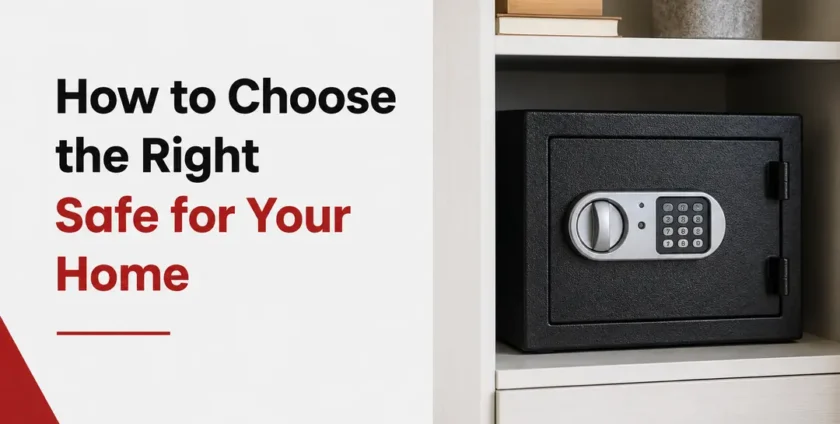
A home safe can help protect the things that matter most, including important documents, jewelry, cash, firearms, family keepsakes, passports, property records, and other valuables.
But choosing the right safe is not always simple. Safes come in different sizes, styles, lock types, fire ratings, burglary ratings, and installation options. A small document safe may work for paperwork, but it may not be the right choice for jewelry, firearms, business records, or larger valuables.
The best safe for your home depends on what you need to protect, where the safe will be placed, how often you need access, and what kind of protection matters most.
Hughes Safe & Lock helps homeowners across South Louisiana choose safes for their homes, valuables, documents, firearms, and personal security needs. We serve Denham Springs, Baton Rouge, Covington, Mandeville, Madisonville, Slidell, New Orleans, and nearby communities.
Here is what to consider before choosing a safe for your home.
Start With What You Need to Protect
Before choosing a safe, make a list of what you want to store inside it. This will help you decide the size, type, and level of protection you need.
Homeowners commonly use safes for:
- Birth certificates
- Passports
- Social Security cards
- Property deeds
- Insurance documents
- Wills and legal papers
- Cash
- Jewelry
- Watches
- Collectibles
- Family keepsakes
- Firearms
- Medicine
- Backup drives
- Business records
- Small electronics
A safe for documents may need different features than a safe for jewelry or firearms. Once you know what you need to protect, it becomes easier to choose the right safe.
Decide Whether Fire Protection Matters
Many homeowners want a safe to protect important documents from fire. Fire protection is especially useful for paperwork, family records, legal documents, photos, and some valuables.
A fire-resistant safe is designed to help protect contents from heat for a certain amount of time. However, not every safe offers the same level of fire protection.
When looking at fire protection, consider:
- What items you want to protect
- How long the safe is rated to resist heat
- Whether the safe is meant for paper documents, media, or valuables
- Where the safe will be installed
- Whether fire protection or theft protection is your main concern
If your main goal is to protect important paperwork, fire protection should be a major consideration.
Understand the Difference Between Fire Protection and Theft Protection
One common mistake homeowners make is assuming every safe protects against both fire and theft equally.
That is not always true.
Some safes are mainly designed for fire protection. Others are designed for burglary resistance. Some safes may offer a combination of both, but the level of protection can vary. It is vital to look closely at the engineering of fireproof vs burglary safes to understand how they differ in materials and certification before buying.
A fire safe may help protect documents from heat, but it may not offer the same burglary resistance as a security safe. A burglary safe may provide stronger theft protection, but may not always offer the same fire resistance.
Before buying a safe, decide which concern matters more:
- Fire protection
- Theft protection
- Both fire and theft protection
- Quick daily access
- Long-term document storage
- Firearm storage
- Business storage
A locksmith or safe professional can help you understand which option fits your needs.
Choose the Right Safe Size
Safe size is one of the most important decisions. Many people buy a safe that seems large enough at first, only to outgrow it later.
When choosing a safe size, think beyond what you need today. Consider what you may want to store in the future.
You may need space for:
- Additional documents
- More jewelry
- Firearms
- Cash
- Family records
- Business paperwork
- Collectibles
- External hard drives
- Important keys
- Small valuables
It is usually better to choose a safe with some extra room rather than buying the smallest option available.
A safe that is too small can become frustrating quickly. A properly sized safe gives you room to organize and expand over time.
Consider Where the Safe Will Be Installed
Where you place the safe matters for both convenience and security.
Common home safe locations include:
- Bedroom closet
- Home office
- Utility room
- Garage
- Interior closet
- Basement area
- Hidden storage area
- Built-in cabinet area
When choosing a location, think about:
- How often you need access
- Whether the space is private
- Whether the floor can support the safe
- Whether the safe can be properly installed
- Whether the location is too obvious
- Whether moisture or heat could be a concern
- Whether the safe can be moved into the space
Large safes may require planning before delivery and installation. Hallways, stairs, door widths, flooring, and placement all matter.
Think About Safe Weight and Installation
A safe should not only be chosen by size. Weight and installation also matter.
A lightweight safe may be easier to move, but that can also make it easier for someone else to remove. Heavier safes can provide more security, but they may require professional placement.
Some safes can be bolted down for added protection. This helps prevent the safe from being easily carried away.
Professional safe installation can help with:
- Placement
- Floor support considerations
- Anchoring options
- Door clearance
- Safe positioning
- Security planning
- Avoiding damage during installation
If you are buying a larger safe, it is smart to speak with a safe professional before choosing the final location.
Choose the Right Lock Type
Safes can come with different lock options. Each has its own advantages.
Common safe lock types include:
- Mechanical dial locks
- Electronic keypad locks
- Key locks
- Combination locks
- Biometric locks
- Dual-lock systems
A mechanical dial lock can be reliable and does not require batteries, but it may take longer to open. An electronic keypad lock can be faster and more convenient, but it may require battery maintenance. A key lock may be simple, but the key itself must be protected.
The right lock type depends on how often you use the safe, who needs access, and how comfortable you are with the lock system.
Choose a Safe Based on Use, Not Just Price
It can be tempting to buy the cheapest safe available online. But a safe protects important items, so price should not be the only factor.
A very inexpensive safe may be fine for basic storage, but it may not provide the level of fire protection, theft protection, or durability you expect.
When comparing safes, consider:
- What the safe is designed to protect
- The safe’s size and weight
- Lock quality
- Fire resistance
- Burglary resistance
- Construction quality
- Installation options
- Warranty and service support
- Whether replacement parts or service are available
A safe is a long-term purchase. Choosing carefully can help avoid problems later.
Home Safes for Documents
If your main goal is protecting documents, you may want a safe that offers fire resistance and enough interior space for paperwork.
Documents that may belong in a safe include:
- Birth certificates
- Passports
- Property deeds
- Insurance policies
- Tax records
- Wills
- Marriage certificates
- Vehicle titles
- Medical records
- Business documents
Make sure the safe can store the documents without bending or overcrowding them. If you want to store folders, binders, or envelopes, check the interior dimensions carefully.
Home Safes for Jewelry and Valuables
Jewelry, watches, cash, and small valuables may require stronger theft protection than a basic document safe.
If you are storing valuables, consider:
- Burglary protection
- Safe weight
- Lock type
- Anchoring options
- Interior organization
- Shelves or drawers
- Privacy of location
- How often you need access
A safe for jewelry should make it easy to organize items while keeping them protected.
Home Safes for Firearms
If you are storing firearms, safe selection becomes especially important. A gun safe should help keep firearms secured from unauthorized access while also allowing responsible access when needed.
When choosing a gun safe, consider:
- Firearm size and quantity
- Ammunition storage
- Interior layout
- Lock type
- Safe weight
- Anchoring options
- Local safety requirements
- Future storage needs
It is usually better to choose a gun safe with more room than you think you need. Many homeowners eventually need additional storage space for accessories, documents, or valuables.
Home Safes for Business Use
Some homeowners also run businesses from home. If you store business records, checks, cash, contracts, keys, devices, or sensitive paperwork at home, you may need a safe that supports both personal and business storage.
For home business use, consider:
- Document capacity
- Fire protection
- Theft protection
- Access control
- Lock type
- Organization
- Frequency of use
If multiple people need access, think carefully about who should know the combination or have a key.
Should You Buy a Safe Online or From a Locksmith?
Buying a safe online may seem convenient, but it can be difficult to judge quality, size, weight, installation needs, and protection level from a product page alone.
A locksmith or safe professional can help you choose a safe based on your actual needs. They can also help with placement, installation, service, and future support.
Working with a local safe provider can be especially helpful if:
- You are unsure what size to choose
- You need fire and theft protection
- You need a gun safe
- You need a business safe
- You want the safe professionally installed
- You need help opening or servicing a safe later
- You want advice before buying
Hughes Safe & Lock can help homeowners choose safes that fit their space, contents, and security needs.
Common Mistakes to Avoid When Choosing a Safe
When shopping for a home safe, avoid these common mistakes:
- Buying a safe that is too small
- Choosing based only on price
- Assuming all safes are fireproof
- Assuming all safes are burglary-resistant
- Ignoring installation needs
- Placing the safe in an obvious location
- Forgetting about future storage
- Choosing the wrong lock type
- Not considering a safe weight
- Buying without asking for professional advice
A little planning before purchase can save frustration later.
When Should You Upgrade Your Home Safe?
If you already have a safe, it may still be worth reviewing whether it fits your current needs.
You may need to upgrade if:
- The safe is too small
- The lock is unreliable
- You have more valuables than before
- You need firearm storage
- You need better fire protection
- You need better theft protection
- The safe is damaged
- You no longer trust the lock or the combination
- Your family or business needs have changed
A safe that worked years ago may not be the best fit today.
Get Help Choosing the Right Home Safe
The right safe should match your home, your belongings, and your security concerns. A safe for documents is different from a safe for jewelry, firearms, cash, or business records.
Before buying, think about what you need to protect, where the safe will go, how often you will use it, and whether fire protection, burglary protection, or both matter most.
If you are unsure how to pick, learning how to choose a licensed locksmith in Louisiana ensures you work with a trusted expert who can securely evaluate your security needs. If you ever experience an accidental lockout or mechanical failure with your security hardware, you can rely on our quick-response emergency locksmith services to restore access safely.
Call Hughes Safe & Lock for Home Safe Guidance
Hughes Safe & Lock helps homeowners across South Louisiana choose, install, open, and service safes.
We serve Denham Springs, Baton Rouge, Covington, Mandeville, Madisonville, Slidell, New Orleans, and nearby communities.
Whether you need a safe for documents, jewelry, firearms, cash, valuables, or family keepsakes, our team can help you choose the right option.
For professional safe service, call Hughes Safe & Lock at 225-664-2815 or 985-809-5625.
FAQs About Choosing a Home Safe
What size safe do I need for my home?
The right size depends on what you plan to store. Make a list of documents, jewelry, firearms, cash, or valuables you want to protect, then choose a safe with extra room for future storage.
Do I need a fireproof safe or a burglary safe?
It depends on your main concern. If you want to protect documents from fire, fire protection matters. If you want to protect valuables from theft, burglary resistance matters. Some safes may offer both.
Where should I put a safe in my home?
Choose a location that is private, practical, and suitable for installation. Closets, home offices, utility rooms, and other interior spaces may work depending on the safe size and weight.
Should a safe be bolted down?
In many cases, bolting down a safe can improve security by making it harder to remove. A safe professional can help you decide whether anchoring is appropriate.
Is a small safe enough for documents?
A small safe may work for basic documents, but check the interior dimensions carefully. If you need to store folders, envelopes, binders, or future paperwork, choose a larger size.
Can Hughes Safe & Lock help me choose a safe?
Yes. Hughes Safe & Lock can help homeowners choose safes for documents, valuables, firearms, cash, and other personal items across South Louisiana.
- By: andrew
- Category: Home Security
- 0 Comments
 Hughes Safe & Lock provides the finest quality work for residential and commercial clients.