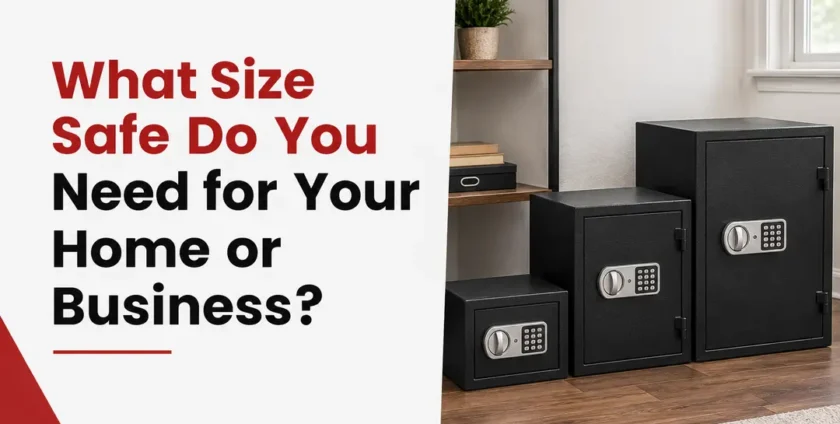
Choosing the right safe size is one of the most important parts of buying a safe. A safe that is too small can quickly become frustrating. A safe that is too large may be harder to place, move, or install. The right size depends on what you need to protect, how often you need access, where the safe will be installed, and whether you may need more storage space in the future.
Many people choose a safe based only on what they need today. But over time, you may want to store more documents, jewelry, firearms, cash, records, keys, digital drives, or business materials. That is why it is usually better to choose a safe with extra room instead of buying the smallest option available.
Hughes Safe & Lock helps homeowners and businesses across South Louisiana choose safes for documents, valuables, firearms, cash, business records, and other important items. We serve Denham Springs, Baton Rouge, Covington, Mandeville, Madisonville, Slidell, New Orleans, and nearby communities.
Here is how to decide what size safe you need for your home or business.
Start With What You Need to Store
Before choosing a safe size, make a list of everything you want to protect. This will help you understand the amount of interior space you need.
Homeowners commonly store:
- Birth certificates
- Passports
- Social Security cards
- Property deeds
- Insurance policies
- Wills and legal documents
- Jewelry
- Watches
- Cash
- Firearms
- Family keepsakes
- Backup drives
- Important keys
- Small electronics
- Photos
- Medical records
Businesses commonly store:
- Cash
- Deposits
- Checks
- Contracts
- Employee records
- Business licenses
- Keys
- Access cards
- Sensitive paperwork
- Backup drives
- Inventory records
- Customer files
- Financial documents
- Small valuables
Once you know what you need to store, it becomes easier to compare safe sizes.
Think About Future Storage
One of the most common safe-buying mistakes is choosing a safe that fits only your current items.
Over time, you may need room for:
- More documents
- Additional jewelry
- More business records
- Firearm accessories
- Extra cash storage
- Family records
- New valuables
- Backup drives
- Property paperwork
- Important keys
A safe that seems large enough today may feel too small in a year or two. If you are unsure, choose a safe with more room than you think you need.
This is especially important for families, business owners, collectors, firearm owners, and anyone storing paperwork that grows over time.
Safe Size for Important Documents
If you mainly need a safe for documents, pay close attention to interior dimensions.
Documents may include:
- Birth certificates
- Passports
- Property deeds
- Vehicle titles
- Insurance policies
- Tax records
- Wills
- Marriage certificates
- Medical records
- Business papers
A small safe may hold folded documents, but that may not be ideal for long-term storage. If you want to keep documents flat, organized, and easy to access, choose a safe that can fit folders, envelopes, or binders.
You may also want room for document sleeves, file folders, or a small organizer.
For document storage, do not only look at the outside dimensions of the safe. The interior space is what matters.
Safe Size for Jewelry and Valuables
If you are storing jewelry, watches, cash, collectibles, or family keepsakes, you may need more space than you expect.
Jewelry and valuables often require organization. Instead of stacking everything together, you may want room for trays, boxes, pouches, or small compartments.
Consider space for:
- Rings
- Necklaces
- Watches
- Bracelets
- Cash
- Coins
- Collectibles
- Heirlooms
- Small electronics
- Precious metals
- Sentimental items
If you have high-value items, safe size is only one factor. You should also consider burglary protection, safe weight, installation, anchoring, and lock type. If you are a homeowner figuring out your options, reading a guide on how to choose the right safe for your home will help you balance size with security features.
Safe Size for Firearms
If you are choosing a gun safe, size is especially important. Many firearm owners outgrow their first safe because they buy based only on the firearms they currently own.
When choosing a gun safe, think about:
- Number of firearms
- Long guns vs handguns
- Ammunition storage
- Accessories
- Optics
- Holsters
- Cleaning supplies
- Important documents
- Other valuables you may store with firearms
A gun safe should have enough room to store firearms responsibly and keep them organized. If you plan to add firearms or accessories later, choose a larger safe from the beginning.
A safe that is too crowded can make access difficult and may increase the chance of scratches or damage.
Safe Size for Cash and Business Deposits
Businesses that store cash, checks, deposits, keys, or sensitive materials need a safe that fits daily operations.
A small business safe may be used for:
- Cash drawers
- Deposit bags
- Checks
- Receipts
- Register keys
- Access cards
- Employee files
- Business documents
- Small inventory items
- Sensitive materials
If the safe will be used daily, make sure it is large enough for regular deposits and easy enough to access. A safe that is too small can slow down daily operations and create clutter.
Businesses should also consider who needs access and whether the safe needs to support multiple users.
Safe Size for Home Offices
Many homeowners now store work documents, business records, devices, and sensitive paperwork at home. If you work from home or run a small business, your safe may need to serve both personal and business needs.
A home office safe may store:
- Client files
- Contracts
- Tax records
- Business licenses
- Backup drives
- External hard drives
- Company checks
- Financial documents
- Personal records
- Password notebooks
- Keys
For home office use, choose a safe that can organize documents clearly. If paperwork is important, make sure the interior can fit files without bending them.
Safe Size for Keys and Access Cards
Some homes and businesses need safes for keys, access cards, remotes, or small security items.
This may include:
- House keys
- Vehicle keys
- Business keys
- Rental property keys
- Office keys
- Access cards
- Gate remotes
- Storage unit keys
- Safe deposit box keys
If you are storing many keys, you may need a safe with hooks, compartments, or room for a key organizer.
For landlords, property managers, and businesses, key control is important. The safe should be large enough to keep keys organized, not just locked away.
Small Safes: When They Make Sense
A small safe may be enough if you only need to protect a few documents or small valuables.
Small safes may work for:
- Passports
- Birth certificates
- Small amounts of cash
- Jewelry
- Backup drives
- Personal documents
- Small keepsakes
However, small safes can be limiting. They may fill up quickly, and if they are lightweight, they may be easier to remove unless properly secured.
If you choose a small safe, consider whether it can be anchored and whether it provides the level of fire or theft protection you need.
Medium Safes: A Practical Choice for Many Homes
A medium-sized safe is often a good option for homeowners who need more than basic storage.
Medium safes may work for:
- Family documents
- Jewelry
- Cash
- Small electronics
- Backup drives
- Handguns
- Important keys
- Legal paperwork
- Insurance records
- Property documents
This size can provide a better balance between storage, placement, and accessibility. It may also give you room to grow without requiring the space of a large safe.
Large Safes: When More Space Is Worth It
A large safe may be the right choice if you need to store firearms, large amounts of paperwork, business records, multiple valuables, or items for several family members.
Large safes may work for:
- Long guns
- Multiple firearms
- Large jewelry collections
- Business records
- Cash storage
- Collectibles
- Family documents
- Sensitive files
- Multiple users
- Future storage needs
Large safes can offer more room and stronger protection, but they require more planning. You need to consider placement, delivery path, flooring, door width, weight, and installation.
Do Not Forget Interior Dimensions
When comparing safes, do not rely only on the outside size. Interior dimensions are what determine how much you can actually store.
The safe’s walls, fire protection material, door thickness, shelves, and lock design can reduce usable space inside.
Before buying, check:
- Interior height
- Interior width
- Interior depth
- Shelf layout
- Door clearance
- Whether folders or binders fit
- Whether firearms fit
- Whether valuables can be organized
- Whether the safe has adjustable shelves
A safe may look large from the outside but feel smaller inside.
Safe Placement Can Limit Size
Where you plan to put the safe can affect what size you can choose.
Common safe locations include:
- Bedroom closet
- Home office
- Utility room
- Garage
- Interior closet
- Storage room
- Business office
- Back office
- File room
Before choosing a safe, measure the space carefully. Also measure the path to that space.
Consider:
- Doorways
- Hallways
- Stairs
- Flooring
- Turns and corners
- Ceiling height
- Closet depth
- Door swing
- Safe door clearance
- Floor support
A safe must not only fit in the final location. It must also be able to get there safely.
Safe Weight Matters
Safe size and safe weight often go together, but not always. A larger safe may be heavier, and a heavier safe may require special placement or installation planning.
Weight matters because:
- Heavy safes may be harder to move
- Floors may need to support the weight
- Delivery may require special handling
- Stairs can complicate placement
- Heavier safes may be harder to remove
- Anchoring may still be recommended
If you are choosing a larger safe, speak with a safe professional before deciding where it should go.
Should You Bolt Down Your Safe?
In many cases, bolting down a safe can improve security. This is especially important for smaller safes that could be carried away.
Anchoring can help prevent the safe from being easily removed from your home or business.
Whether a safe should be bolted down depends on:
- Safe size
- Safe weight
- Location
- Flooring
- Security needs
- Type of contents
- Installation requirements
A safe professional can help determine whether anchoring is appropriate for your safe.
Safe Size for Businesses
Businesses should choose safe size based on daily operations, not just storage.
A business safe may need room for:
- Daily cash deposits
- Checks
- Receipts
- Keys
- Access cards
- Employee records
- Business documents
- Sensitive items
- Backup drives
- Important contracts
If multiple employees need access, the safe should be easy to use and organized. If cash is stored regularly, the safe should support the amount of cash or deposits handled during normal operations.
Businesses should also consider whether they need a safe for daily use, long-term storage, or both.
Safe Size for Retail Stores
Retail stores may need a safe for cash, deposits, register keys, receipts, and business records.
A retail safe should be large enough for daily deposit bags and easy enough for authorized employees to use. If the store handles cash regularly, the safe should not be so small that it becomes cluttered.
Retail businesses should also think about access control. Not everyone should know the combination or have access to the safe.
Safe Size for Offices
Offices may need safes for documents, contracts, checks, HR files, backup drives, access cards, keys, and sensitive materials.
For office use, organization is important. A safe should have enough room for file folders, envelopes, binders, or secure storage boxes.
If the safe is used by more than one manager, choose a size and lock type that supports practical access.
Safe Size for Landlords and Property Managers
Landlords and property managers often need secure storage for keys, leases, tenant files, access cards, and property documents.
A safe for property management may need room for:
- Multiple property keys
- Lease documents
- Access cards
- Gate remotes
- Maintenance keys
- Vendor keys
- Tenant records
- Deposit records
Organization is just as important as size. A safe that is large enough but poorly organized can still create problems.
Fire Protection Can Affect Interior Space
Fire-resistant safes often have thicker walls to help protect contents from heat. This can reduce interior space compared to the exterior size.
Fire-resistant safes often have thicker walls to help protect contents from heat. This can reduce interior space compared to the exterior size.
If you are sorting out what kind of internal composition your assets require, reviewing the core engineering differences outlined in our guide on fireproof vs burglary safes will help ensure you select the appropriate protection layout. If fire protection is important, make sure the safe still has enough usable room inside for your documents or valuables.
For documents, check whether the safe can fit folders flat. For business records, make sure it can hold the volume of paperwork you need.
Burglary Protection Can Affect Size and Weight
Burglary-resistant safes may be heavier and more strongly built than basic storage safes. They may include stronger doors, thicker walls, better locking systems, and more secure construction.
If theft protection is your main concern, do not choose based on size alone. A larger safe is not automatically more secure. When evaluating hardware for forced entry resistance, it helps to understand structural engineering concepts similar to how you evaluate high security locks vs standard locks. You should always look closely at safe construction, lock quality, weight, installation, and anchoring.
Common Mistakes When Choosing Safe Size
Avoid these mistakes when choosing a safe:
- Buying the smallest safe available
- Forgetting future storage needs
- Measuring only exterior dimensions
- Ignoring shelf layout
- Forgetting about document size
- Choosing a safe that cannot fit through doorways
- Ignoring safe weight
- Not planning for installation
- Buying a safe that cannot be anchored
- Storing valuables in a safe with too little protection
- Buying online without understanding actual usable space
A safe should fit your space, your belongings, and your security needs.
How to Choose the Right Safe Size
To choose the right safe size, ask yourself:
- What do I need to store right now?
- What might I need to store later?
- Do I need space for documents, jewelry, firearms, cash, or records?
- Do I need shelves or compartments?
- Will the safe fit in my chosen location?
- Can the safe be delivered and installed safely?
- Do I need fire protection, burglary protection, or both?
- Will the safe be used daily or only occasionally?
- Who needs access?
- Should the safe be bolted down?
These questions can help narrow your options.
Get Help Choosing the Right Safe Size
The right safe size depends on more than measurements. It depends on what you are protecting, how often you need access, and where the safe will be placed.
A safe that is slightly larger than your current needs is often the smarter choice. It gives you room to grow and helps keep items organized.
If you are unsure, Hughes Safe & Lock can help you compare safe options for your home or business.
Call Hughes Safe & Lock for Safe Selection and Installation
Hughes Safe & Lock helps homeowners and businesses choose, install, open, and service safes across South Louisiana.
We serve Denham Springs, Baton Rouge, Covington, Mandeville, Madisonville, Slidell, New Orleans, and nearby communities.
Whether you need a safe for documents, jewelry, firearms, cash, business records, or valuables, our team can help you choose the right size and type.
For professional safe service, call Hughes Safe & Lock at 225-664-2815 or 985-809-5625.
FAQs About Safe Sizes
What size safe do I need for documents?
Choose a safe with enough interior space for documents, folders, envelopes, or binders. If you want documents to stay flat, check the interior dimensions carefully.
Should I buy a bigger safe than I need?
In many cases, yes. People often outgrow small safes quickly. Choosing a safe with extra room can help with future storage.
What size safe do I need for jewelry?
It depends on how much jewelry you have and how you want to organize it. Make sure there is room for trays, boxes, pouches, or compartments.
What size safe do I need for a business?
A business safe should be large enough for cash, deposits, keys, checks, documents, and daily operational needs. Consider both storage and ease of use.
Does safe weight matter?
Yes. Safe weight affects placement, delivery, installation, and security. Heavier safes may require more planning.
Can Hughes Safe & Lock help me choose the right safe size?
Yes. Hughes Safe & Lock can help homeowners and businesses choose the right safe size for documents, valuables, firearms, cash, and business records.
- By: andrew
- Category: Home Security
- 0 Comments
 Hughes Safe & Lock provides the finest quality work for residential and commercial clients.